Alcoholism is a condition that affects every part of the body, often leading to hidden complications like anemia. Anemia, a disorder where the body lacks enough healthy red blood cells, can leave individuals feeling exhausted, weak, and unable to perform daily tasks.
Chronic alcohol use disrupts essential processes like nutrient absorption and blood cell production, increasing the risk of developing various types of anemia. In this article, we explore the connection between alcoholism and anemia, the types of anemia linked to alcohol use, and why seeking treatment can be a life-changing step toward recovery.
What is Anemia?
Anemia is a condition that occurs when a person’s body lacks enough healthy red blood cells to carry oxygen to tissues and organs. People suffering from anemia often experience symptoms like fatigue, weakness, pale skin, and shortness of breath. When anemia gets worse, the body struggles to receive enough oxygen, which can cause symptoms like dizziness, chilly hands and feet, chest pain, or an irregular heartbeat.
What are Red Blood Cells?
Red blood cells (RBCs) are responsible for delivering oxygen to the body and removing carbon dioxide. Their production depends on key nutrients like iron and vitamin B9 (folate), and vitamin B12.
- Iron: Essential for making hemoglobin, the protein in RBCs that carries oxygen. Without enough iron, the body can’t produce healthy RBCs, leading to iron-deficiency anemia.
- Vitamin B9 (Folate): Crucial for DNA synthesis and the formation of red blood cells. A deficiency in folate can cause abnormally large RBCs that don’t function properly, resulting in megaloblastic anemia.
- Vitamin B12: Necessary for red blood cell maturation and DNA production. A lack of B12 leads to megaloblastic anemia, similar to folate deficiency, and can also cause neurological symptoms like numbness or memory problems.
When you drink alcohol, it stops your body from properly absorbing key nutrients like iron, vitamin B9, and vitamin B12. Without these, your body can’t produce enough healthy red blood cells.
How Does Alcoholism Cause Anemia?
When you take alcohol into your body, the nutrients needed to make red blood cells (Iron, B9, B12) are not absorbed properly, as alcohol interferes with the digestion and storage processes, leaving your body unable to produce enough healthy red blood cells.
Global Impact of Anemia
The chart represents the estimated number of people affected by anemia globally across different demographic groups. These numbers are derived from global population data and anemia prevalence rates sourced from organizations like the United Nations and the World Health Organization. The estimates reflect how anemia disproportionately affects vulnerable groups, including children, women of reproductive age, and men, based on varying prevalence rates.
- Children (6–59 months): Anemia affects nearly 40% of children in this age group globally, totaling around 269 million cases.
- Pregnant Women: With a prevalence rate of 36.5%, anemia impacts approximately 180 million pregnant women.
- Non-Pregnant Women: Around 320 million non-pregnant women are affected, with a prevalence of 29.6%.
- Men (All Men): With an estimated prevalence of 12–15%, anemia affects between 468 and 585 million men globally.
Different Types of Anemia Linked to Alcoholism
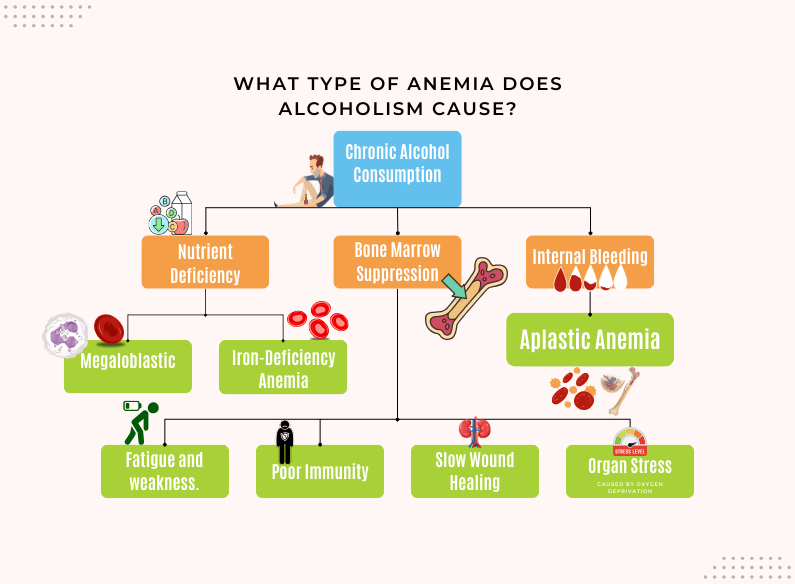
Chronic alcohol use can lead to various types of anemia by disrupting nutrient absorption and damaging bone marrow. It can also cause internal bleeding and suppress the bone marrow, affecting all blood cell types. These effects increase the risk of megaloblastic anemia, iron-deficiency anemia, and aplastic anemia, each with unique health challenges.
Megaloblastic Anemia
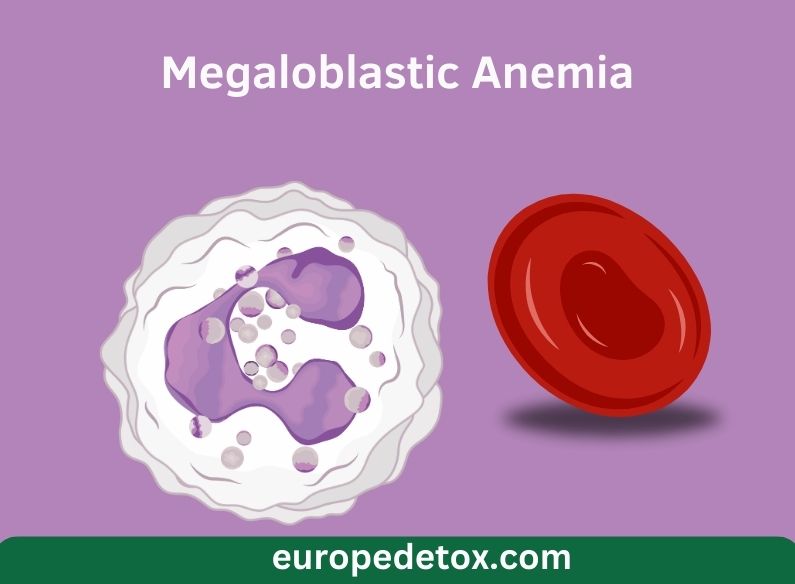
Megaloblastic anemia happens when red blood cells are abnormally large and don’t function well. This often occurs due to a lack of folate (vitamin B9) or vitamin B12, both essential for healthy blood cell production. Chronic alcohol use can reduce the body’s ability to absorb and store these nutrients, increasing the risk of this type of anemia.
Iron-Deficiency Anemia
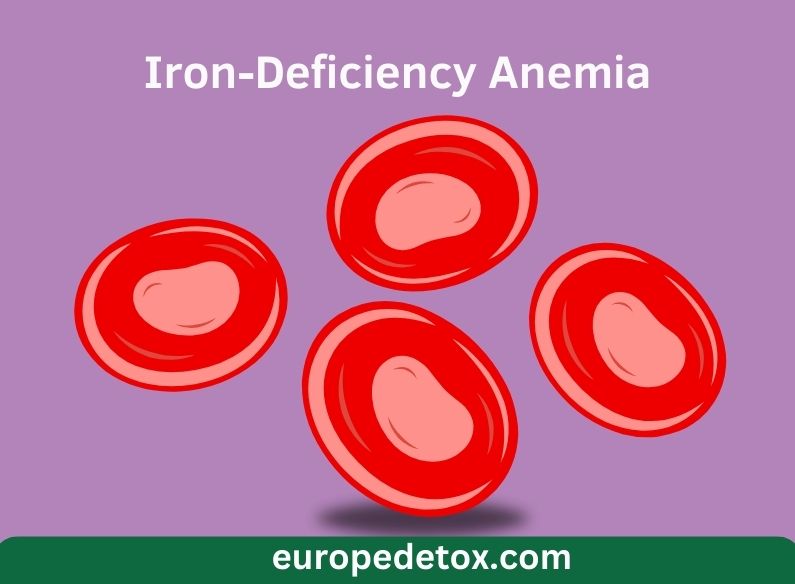
Iron-deficiency anemia is another common type seen in those who consume excessive alcohol. It can develop due to internal bleeding, particularly in the stomach or intestines, which alcohol irritates over time. Without enough iron, the body struggles to produce healthy red blood cells, leaving you feeling tired and weak.
Aplastic Anemia
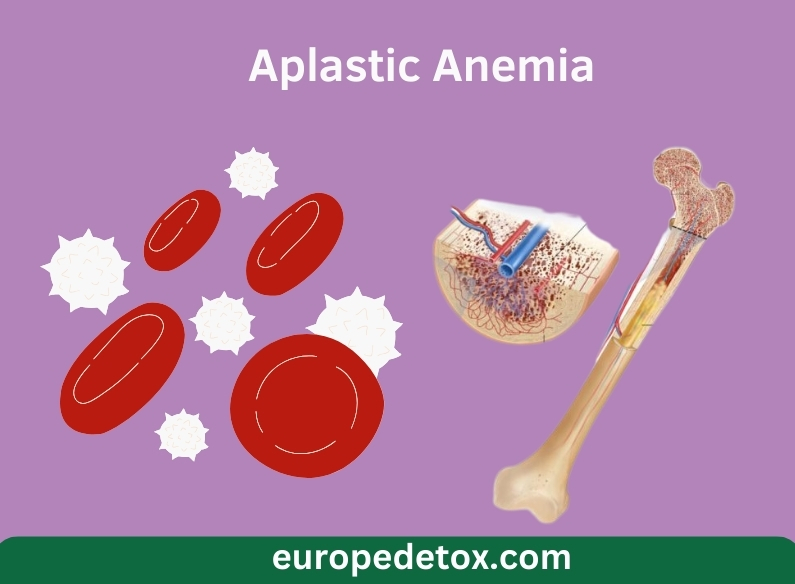
In more severe cases, alcoholism can lead to aplastic anemia, where the bone marrow doesn’t produce enough blood cells. Alcohol suppresses bone marrow activity, which can affect red blood cells, white blood cells, and platelets, making it harder for the body to fight infections or heal wounds.
What Are the Signs and Symptoms of Anemia?
The signs of anemia depend on the type and severity, but common symptoms include:
- Feeling tired or weak
- Pale or yellowish skin
- Shortness of breath
- Dizziness or lightheadedness
- Irregular heartbeat
- Chest pain
- Cold hands and feet
What Is the Treatment for Alcohol-Related Anemia?
The treatment for anemia depends on its cause. For instance, if someone lacks vitamin B12 or folic acid, they can address it by eating a healthier diet, including leafy greens, or receiving regular B12 shots.
In cases of alcohol-related anemia, recovery is possible if alcohol consumption is stopped. The symptoms often improve on their own once alcohol is eliminated from the body. However, if liver damage has occurred, ongoing treatment may be required to manage the condition.
Is Anemia Genetic?
Anemia can happen for many reasons, including:
- Blood loss
- Poor diet
- Certain medications
- Kidney disease
- Cancer
- Genetic conditions
Genetic forms of anemia, such as sickle cell anemia and thalassemia, are passed down through families and affect the way red blood cells work.
Can Alcohol Worsen Existing Anemia?
Yes, alcohol can make anemia even worse. It stops your body from absorbing nutrients like iron and vitamins, leading to fewer healthy red blood cells. If you already have anemia, drinking alcohol can increase symptoms like fatigue, weakness, and shortness of breath.
How to Prevent Alcohol-Induced Anemia?
- Limit or avoid alcohol.
- Eat foods rich in iron, B12, and folate (like leafy greens, meat, and fortified cereals).
- Get regular health check-ups to detect any problems early.
Treatment at Our Clinic
At our clinic, we understand the complex relationship between alcohol use and health conditions like anemia. Through medical detox, nutritional therapy, and personalized care, we help restore your health and rebuild your life. If you or a loved one is struggling with alcoholism, reach out to us today—recovery is possible, and we’re here to guide you every step of the way!
Frequently Asked Questions
Anemia, if left untreated, can cause serious issues like heart failure or stroke. Alcohol abuse adds to the risk by damaging organs like the liver and heart. It can also lead to long-term problems such as cancer, pancreatitis, and chronic fatigue.
Iron-deficiency anemia is the most common type, often caused by inadequate dietary intake or blood loss.
Yes, liver damage affects the production of proteins needed for red blood cell production and can worsen anemia.
Foods rich in iron, like red meat, spinach, lentils, and fortified cereals, as well as those with vitamin B12 and folic acid, are beneficial.